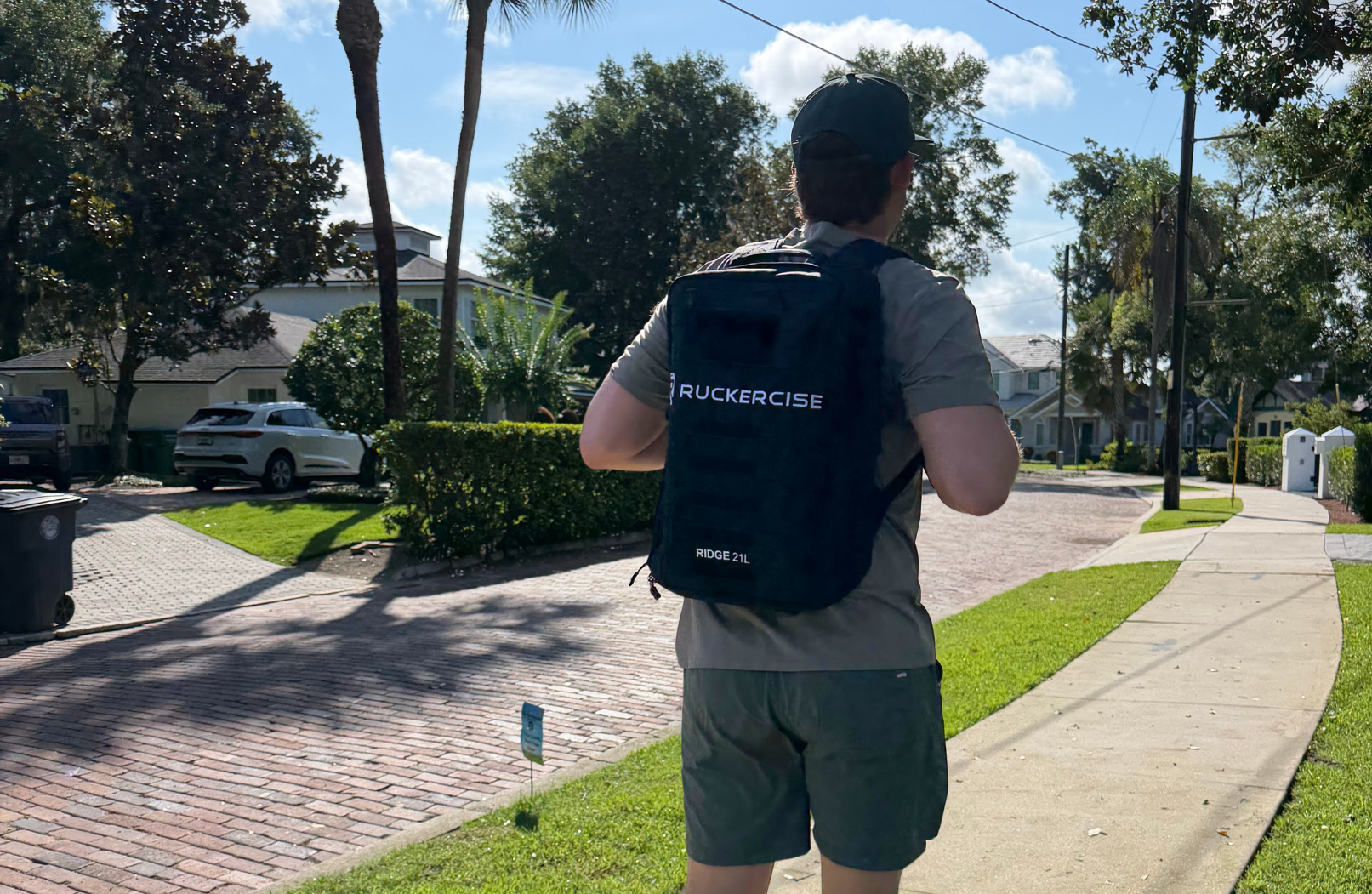

Quick answer: Start with about 10% of your bodyweight, which for most people is a 10 lb or 15 lb Ruck Weight. If you are new to exercise, begin even lighter. Add 5–10 lb no more often than every 2–4 weeks, and only once you can finish your usual route with upright posture. Most experienced ruckers carry 20–30% of their bodyweight.
Load is the one rucking variable that can make or break your first month. Too light and the walk feels like a walk. Too heavy and your posture folds, your feet and shins take a beating, and you stop showing up. This guide gives you a starting weight for your bodyweight, a simple way to progress, and the warning signs that your ruck is too heavy.
Rucking weight chart by bodyweight
Find your bodyweight, then read across to your experience level. In each box, the small grey number is your exact weight at that percentage. The bold number below it is the Ruckercise Ruck Weight we recommend. We round down to the nearest Ruck Weight, so you always start a little lighter, never heavier.
| Your bodyweight | Starting 10% |
Building 15–20% |
Experienced 20–30% |
|---|---|---|---|
| 120 lb |
12 lb 10 lb Ruck Weight |
18–24 lb 20 lb Ruck Weight |
24–36 lb 25–35 lb Ruck Weight |
| 140 lb |
14 lb 10 lb Ruck Weight |
21–28 lb 25 lb Ruck Weight |
28–42 lb 30 or 35 lb Ruck Weight |
| 160 lb |
16 lb 15 lb Ruck Weight |
24–32 lb 25 or 30 lb Ruck Weight |
32–48 lb 35 or 45 lb Ruck Weight |
| 180 lb |
18 lb 15 lb Ruck Weight |
27–36 lb 30 or 35 lb Ruck Weight |
36–54 lb 45 lb Ruck Weight |
| 200 lb |
20 lb 20 lb Ruck Weight |
30–40 lb 30 or 35 lb Ruck Weight |
40–60 lb 45–60 lb of Ruck Weight |
| 220 lb |
22 lb 20 lb Ruck Weight |
33–44 lb 35 lb Ruck Weight |
44–66 lb 45–60 lb of Ruck Weight |
| 240 lb |
24 lb 20 lb Ruck Weight |
36–48 lb 45 lb Ruck Weight |
48–72 lb 55–60 lb of Ruck Weight |
Shortcut for your first Ruck Weight: under 150 lb, start with the 10 lb Ruck Weight. From 150 to 199 lb, start with the 15 lb Ruck Weight. From 200 lb up, start with the 20 lb Ruck Weight.
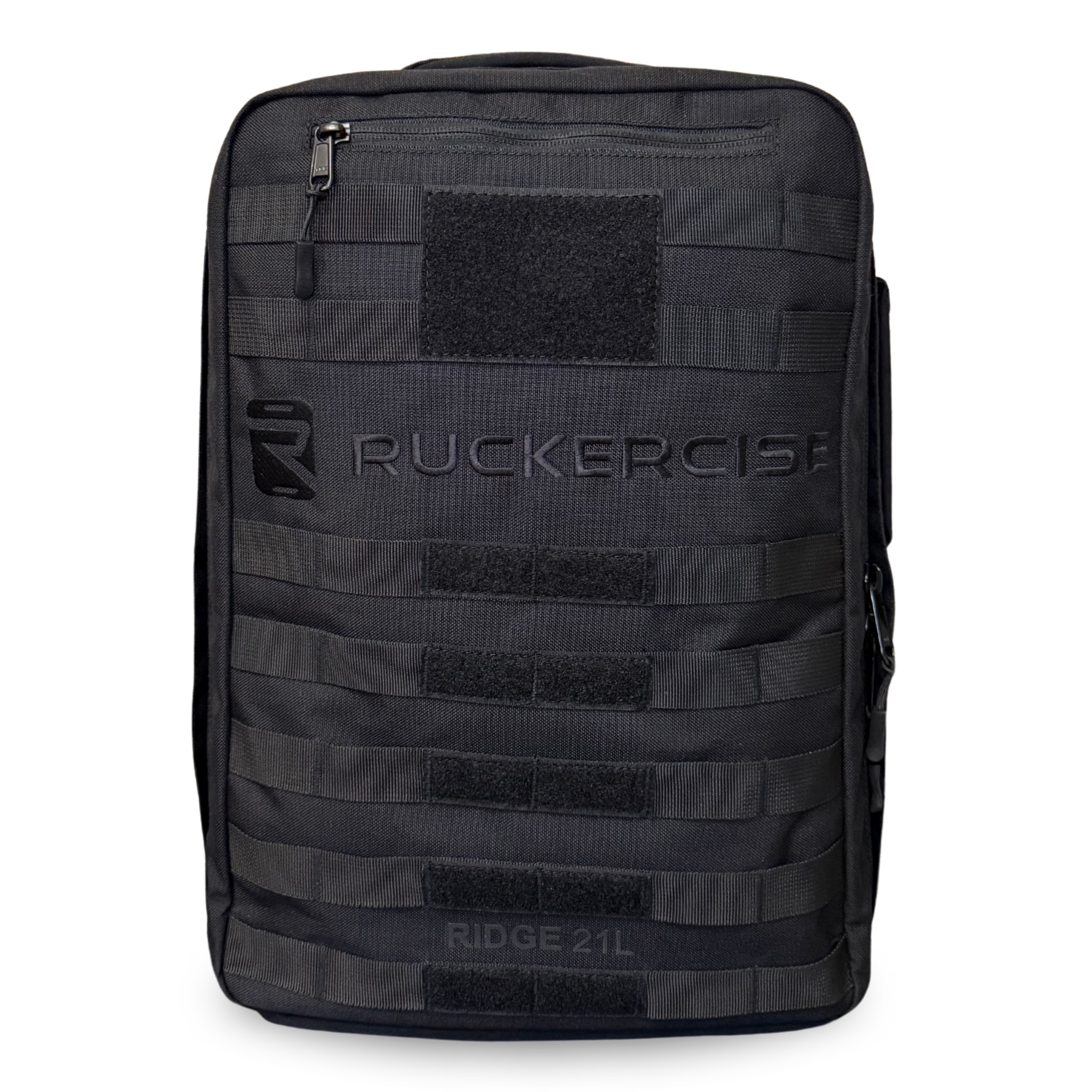
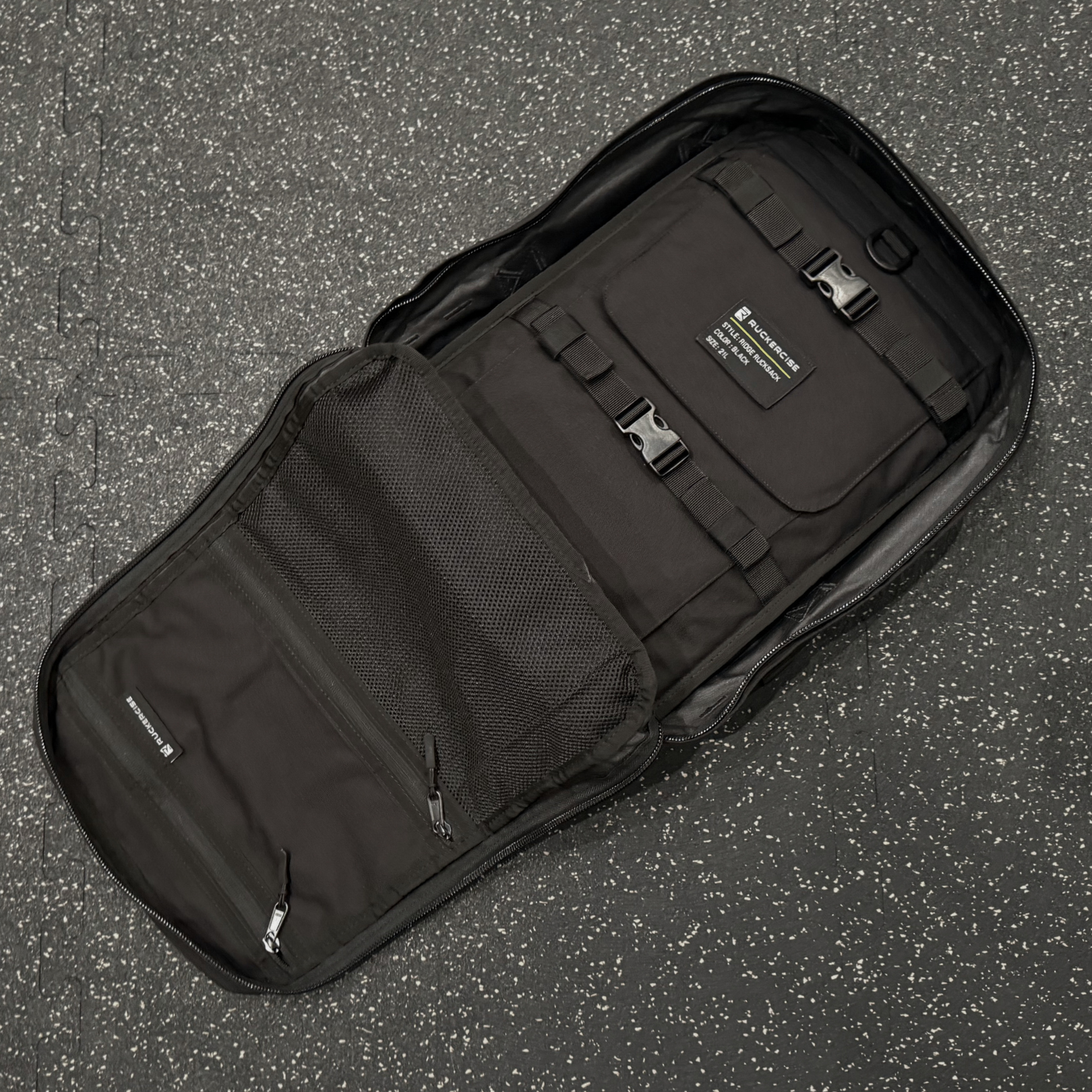
Loads over 45 lb use both weight pockets of the Ridge Rucking Backpack: for example, a 45 lb long Ruck Weight plus a 10 or 15 lb short Ruck Weight. The percentages are practical coaching ranges, not limits set by research. Use them as a starting point and let your posture and recovery decide.
How much weight should a beginner ruck with?
For most beginners, about 10% of bodyweight is the right first load. It is heavy enough to raise your heart rate above a normal walk and light enough to keep good form for the whole route.
- New to exercise: start with an empty pack, or about 5 lb, for your first sessions. Cleveland Clinic sports medicine physician Dr. Matthew Kampert suggests starting a first ruck with about 5 pounds and working up from there.
- Regular walker or gym-goer: 10% of bodyweight, usually a 10 lb or 15 lb Ruck Weight.
- Already fit and training under load: 15–20 lb is a common starting point, as long as your posture holds.
Not sure which Ruck Weight to pick? Choose the lighter one. It is much easier to add weight later than to recover from starting too heavy.
How fast to increase your ruck weight
Progress one thing at a time: time first, then distance, then weight. Dr. Kampert recommends increasing one component by about 10% each week, depending on your fitness level and goals.
- Build time and distance first. Work up to about 3 miles at a steady 15–20 minutes per mile with your starting load.
- Then add weight in small steps. Add 5–10 lb at a time, and no more often than every 2–4 weeks.
- Drop distance when you add weight. Go back to a shorter route for the first session or two at the new load, then rebuild.
- Repeat. Experienced ruckers typically carry 20–30% of their bodyweight.
If you want a structured start, the 4-week beginner rucking plan lays out each session.
What is the most weight you should ruck with?
For fitness rucking, about 30% of bodyweight is a sensible ceiling. That number has military roots. A U.S. Army Research Institute of Environmental Medicine review of soldier load carriage reported Army Infantry School guidance of 30% of bodyweight as an optimal load and 45% as a maximal load for soldiers.
Those soldiers train under load for months. For most people rucking for health, there is little reason to go past 30%. If you want a harder session, add hills, pace or distance before you add more weight.
Signs your ruck is too heavy
- Your posture folds. You lean forward from the waist, your head drops, or your chest caves in to balance the pack.
- Your stride changes. Shorter, choppier steps or a heavy heel strike mean the load is controlling you.
- Feet, shins or knees ache after the ruck. Lower-body injuries are the most common problems in load carriage, according to the Army review. Pain that lingers into the next day is a sign to lighten up.
- Tingling or numbness in your hands or arms. Shoulder straps pressing on nerves can cause this. Stop, loosen the straps and reduce the weight. See a doctor if it doesn't go away.
- You dread the next session. Consistency builds fitness. A load that keeps you from coming back is too heavy.
How to carry the weight
How you carry the load matters as much as how much you carry.
- Keep it close to your back. The Army review notes the load should sit as close as possible to your body's center of mass. A dedicated weight pocket holds a Ruck Weight flat against your back so it doesn't swing or shift.
- Keep the pack above your beltline. Tighten the shoulder straps so the bottom of the pack sits above your belt, then clip the sternum strap for stability.
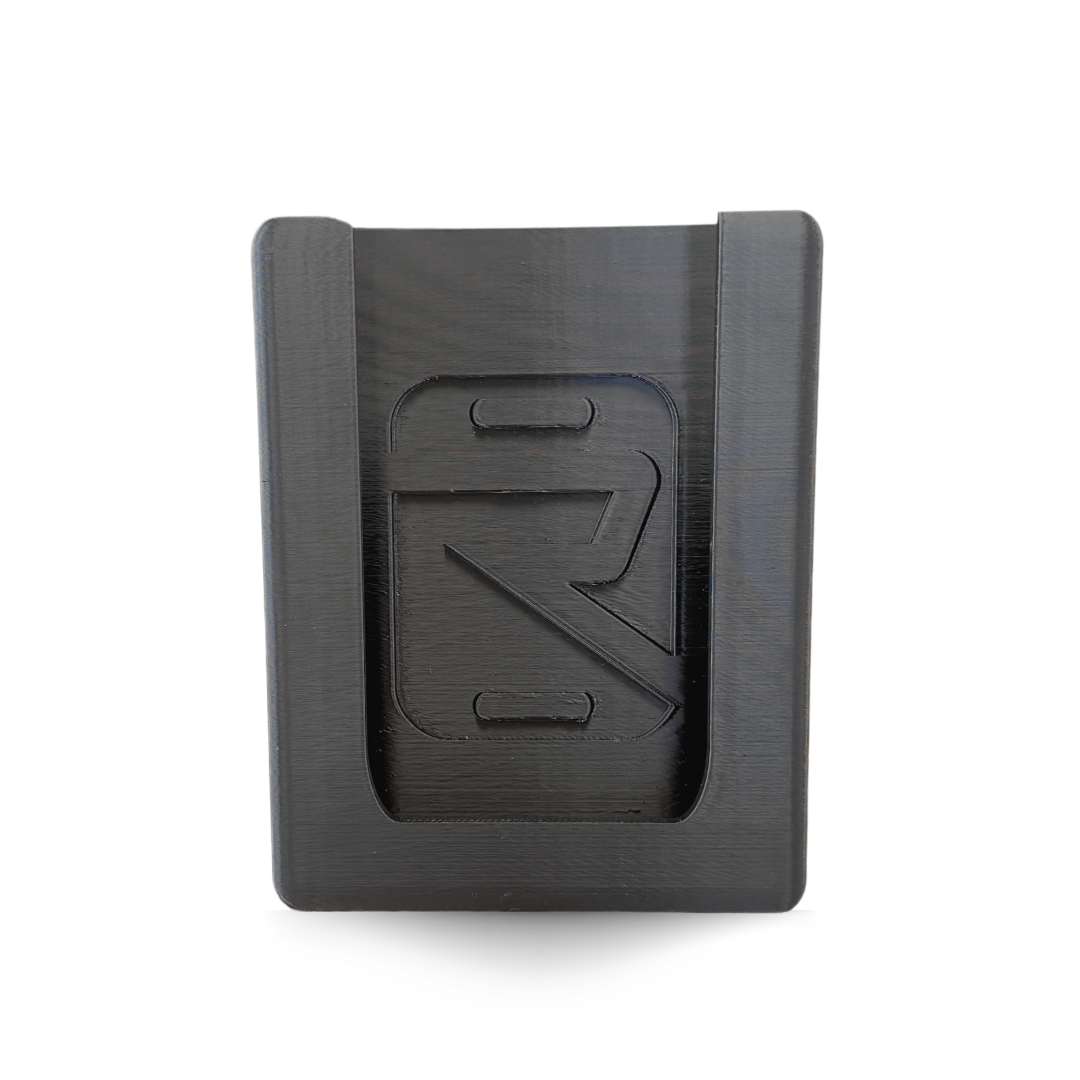
- Use a Ruck Weight, not loose objects. Books, bottles and dumbbells shift and dig into your spine. If you use household items to start, wrap them in a towel. A purpose-made Ruck Weight (also called a ruck plate) is flat, compact and stays put.
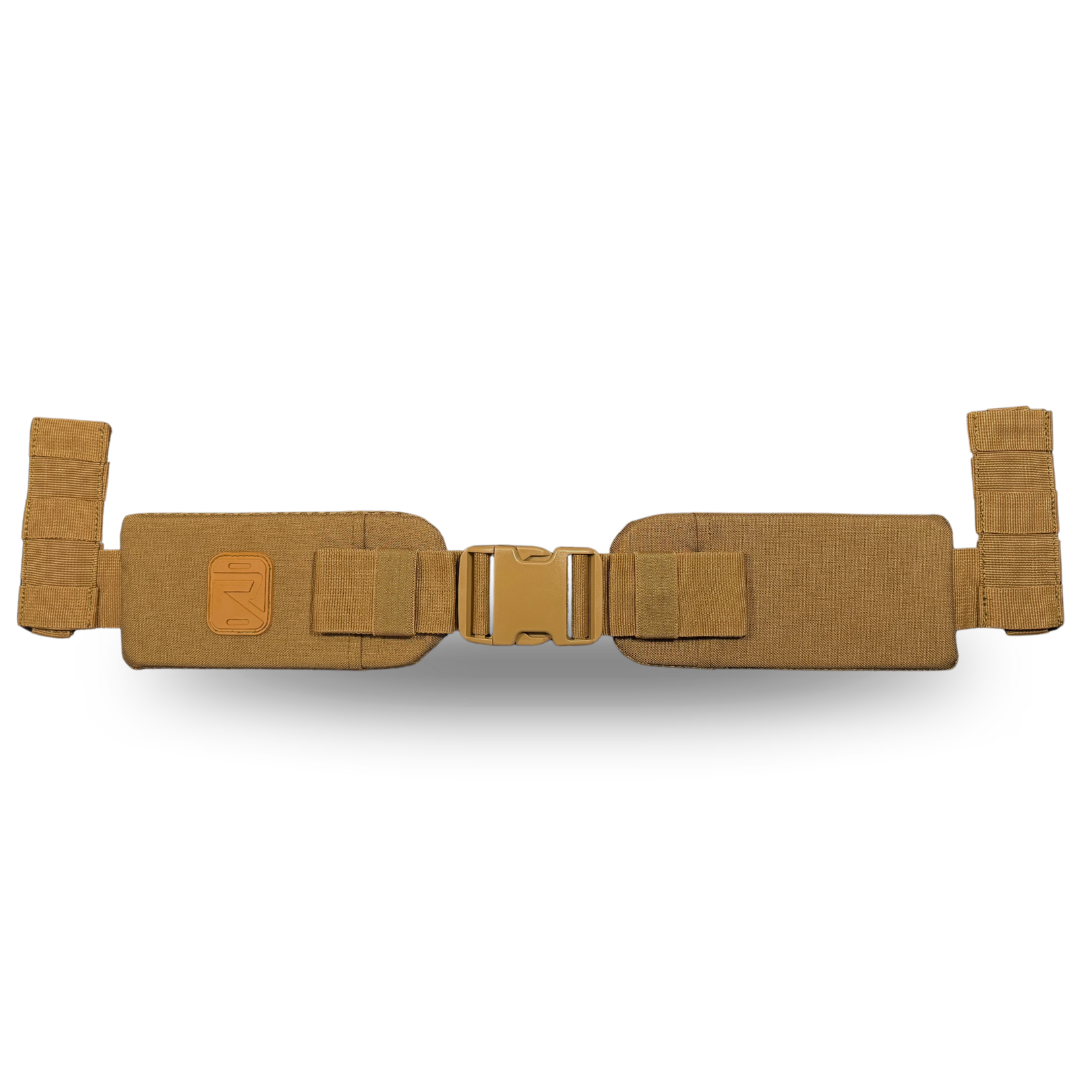
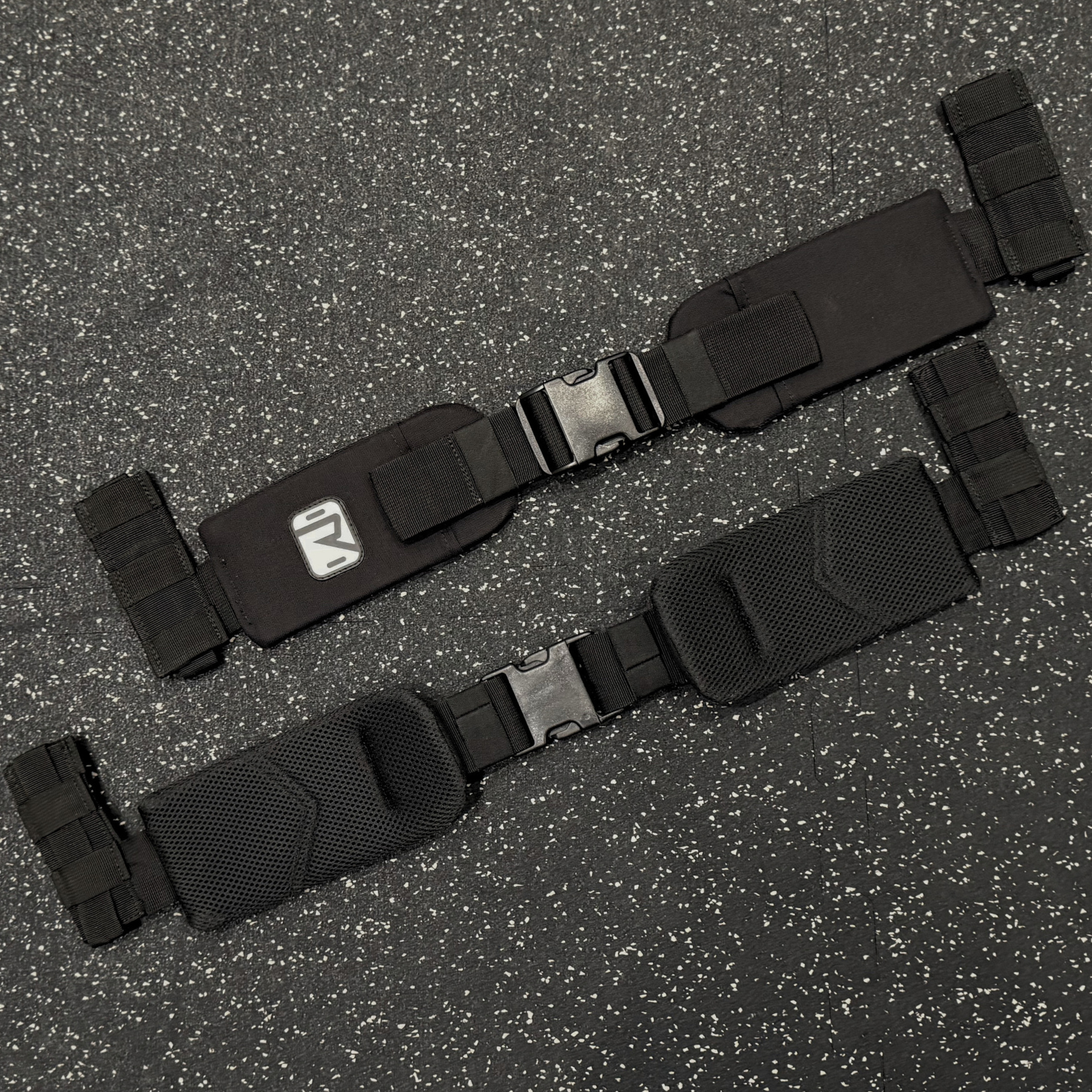
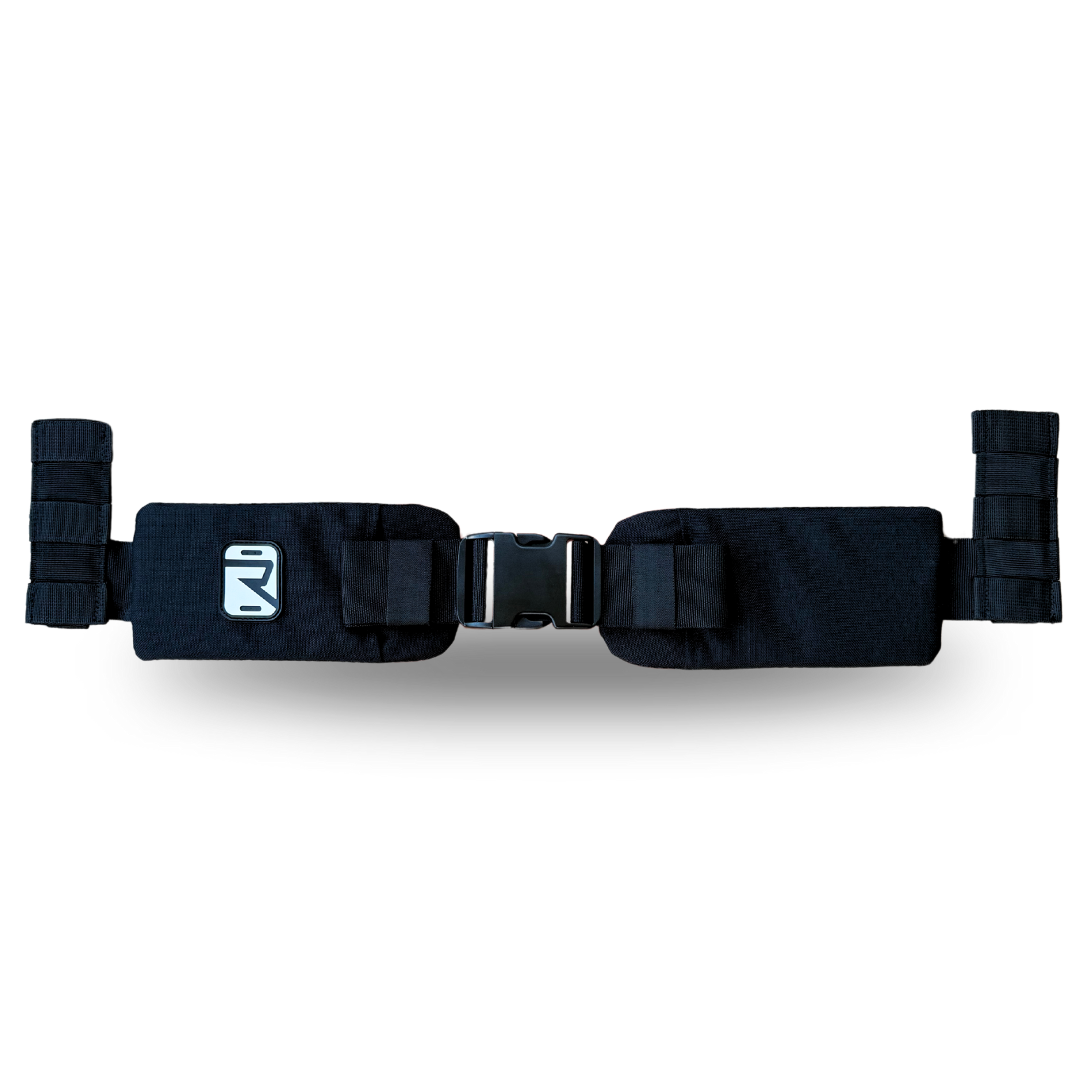
- Add a hip belt as loads climb. A padded hip belt moves part of the weight from your shoulders to your hips. We recommend one for rucks over 20 lb or longer than 30 minutes. In one study cited in the Army review, a framed pack with a hip belt reduced cases of strap-related nerve problems.
Which Ruckercise weight should you buy?
| Ruck Weight | Profile | Best for |
|---|---|---|
| 10 lb | Short | Starting load if you weigh under 150 lb; pairs with a long Ruck Weight later |
| 15 lb | Short | Starting load if you weigh 150–199 lb; pairs with a long Ruck Weight later |
| 20–25 lb | Long | Starting load from 200 lb; building phase for most adults |
| 30–35 lb | Long | Experienced ruckers and building phase for heavier bodyweights |
| 45 lb | Long | Experienced ruckers, event and selection prep |
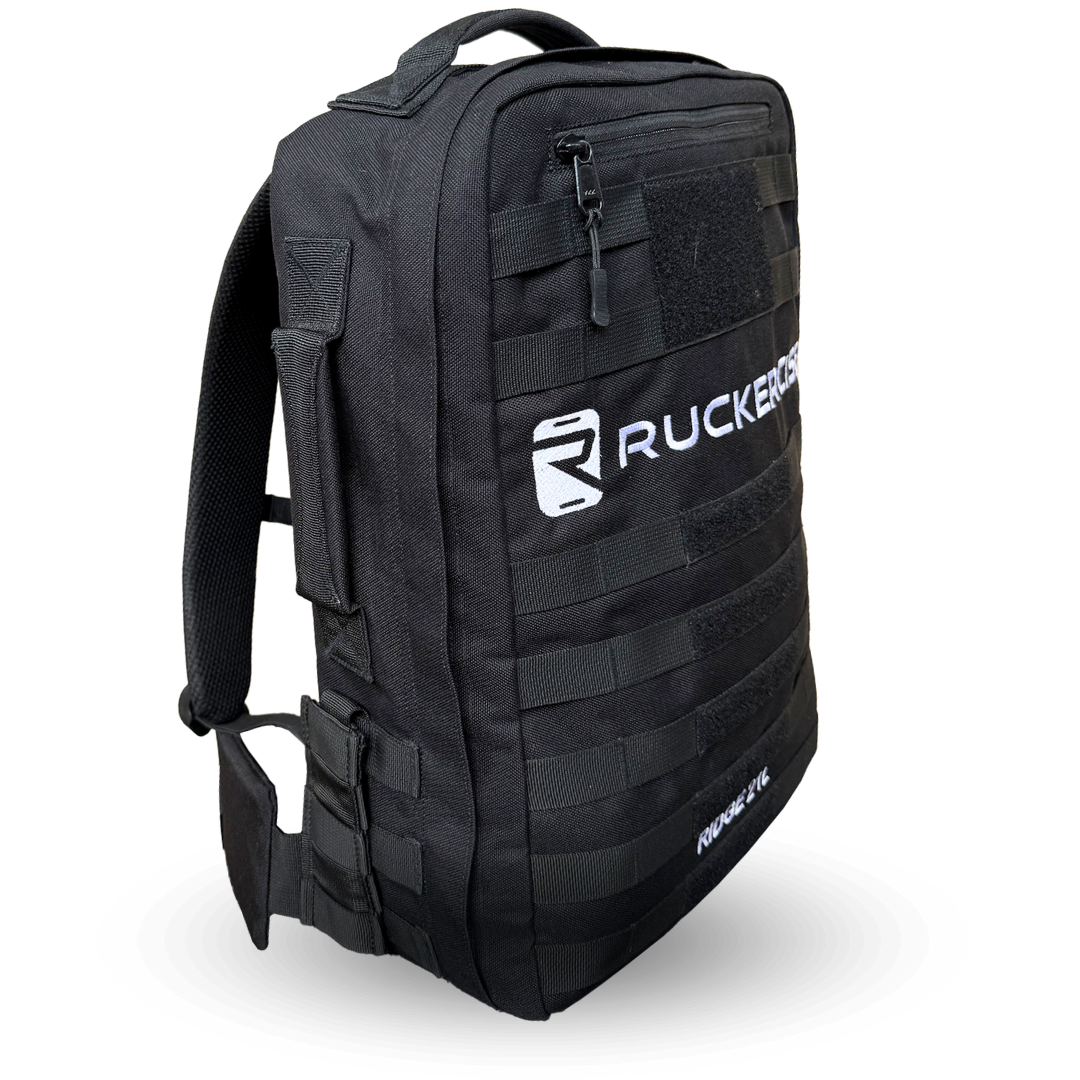
Short Ruck Weights fit either pocket of the Ridge pack. Long Ruck Weights fit the larger pocket, so you can run one short and one long Ruck Weight together and step up without buying a whole new setup.
Starting from scratch? The Complete Rucking Bundle includes the Ridge 21L pack, the Ruck Weight size of your choice and the padded hip belt.
Before you start
Rucking is a low-impact activity that suits most people. Talk to your healthcare provider before starting any new fitness routine, especially if you have bone or joint pain or an existing back condition.
New to rucking? Read our Start Rucking guide, then pick a session from 4 ruck workouts for full-body fitness.